Less Is Actually More: The Strange Case of Getting Better Results With a Lower CBD Dose

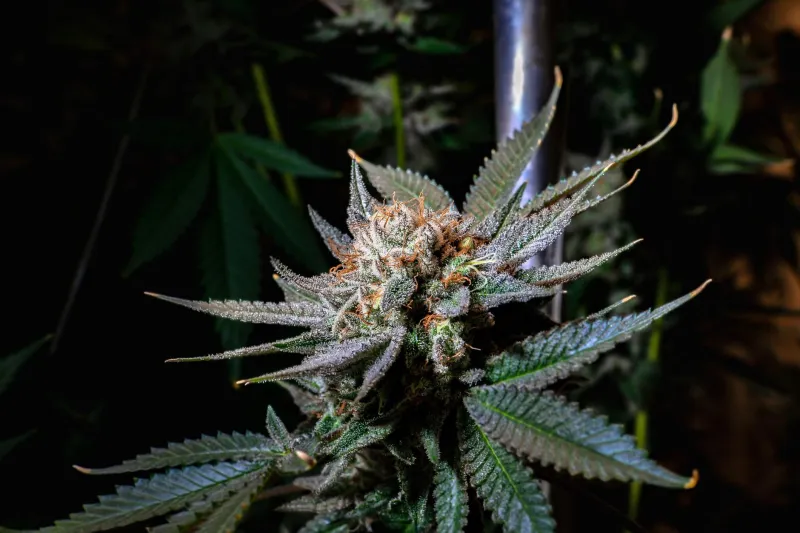
Photo by Photo by Cosmin Ursea on Unsplash on Unsplash
The standard narrative around tolerance goes like this: your body adapts to a substance, receptors downregulate, and over time you need more to get the same effect. It's how most people think about caffeine, alcohol, and plenty of medications. So when CBD starts feeling less effective, the logical move seems obvious — increase the dose.
But here's where CBD gets weird, in an interesting way. A meaningful subset of users — and some emerging research — suggests that for certain people, the opposite happens. Over time, with consistent use, smaller doses produce better results. Less CBD. More effect.
This is sometimes called reverse tolerance, and while it's not universally experienced or fully explained by science, it's real enough to be worth understanding.
What Reverse Tolerance Actually Means
First, a clarification: reverse tolerance isn't a universal CBD experience. Plenty of people do find that their initial dose loses effectiveness over time, and for them, a strategic break or a modest increase makes sense. But reverse tolerance describes a different trajectory — one where the body becomes more responsive to a compound rather than less.
In pharmacology, this kind of sensitization is well-documented with certain substances. The mechanisms vary, but the general idea is that repeated, consistent exposure can sometimes cause receptor systems to become more attuned to a compound rather than more resistant to it. The system learns, in a sense.
The Endocannabinoid System Is Not Like Other Systems
Here's what makes CBD's relationship with tolerance genuinely unusual: it doesn't work the same way THC does.
THC, the psychoactive compound in cannabis, produces tolerance through a well-understood mechanism — it binds directly and aggressively to CB1 receptors, causing them to downregulate over time. This is classic tolerance. Your receptors get used to being overwhelmed, so they reduce their availability.
CBD doesn't work that way. It's not a direct agonist at CB1 or CB2 receptors. Instead, it acts more like a modulator — influencing how the endocannabinoid system functions without flooding it. It also inhibits FAAH, the enzyme that breaks down anandamide (your body's own endocannabinoid). This means CBD may gradually support the ECS in becoming more efficient at doing its own job.
Over time, with consistent supplementation, some researchers theorize that the ECS may actually upregulate — producing more of its own endocannabinoids and becoming more sensitive to both internal and external cannabinoids. If true, this would mean that CBD is essentially training your system to need less outside help over time. The compound would be doing the work of a coach, not a crutch.
What Users Are Actually Reporting
The anecdotal evidence here is worth taking seriously, even if it's not yet backed by large-scale clinical trials.
In wellness communities and CBD user forums across the US, a recurring pattern shows up: someone who started at 25–50mg daily finds, after several months of consistent use, that 10–15mg produces the same or better results. The initial higher dose was necessary to "get things going," but as their system adapted, less became enough.
Others describe a different version: they were gradually reducing their dose to see how little they could get away with, and were surprised to find that their results actually improved at lower levels. Less grogginess. Sharper sleep quality. More even-keeled mood throughout the day.
This isn't everyone's experience. But it's common enough that it deserves a framework.
How to Tell If You're in This Category
Reverse tolerance isn't something you can diagnose upfront. You discover it by paying attention. Here are some signals that suggest your system may be responding to CBD in this sensitization pattern:
Your results have improved steadily over months, not just weeks. The first few weeks of CBD use are often inconsistent as your body adjusts. But if you're several months in and still noticing gradual improvement without changing your dose, your ECS may be becoming more efficient.
You feel better effects at times when you've accidentally taken less. Ran out and stretched your supply? Skipped a dose and noticed you felt fine — maybe even better? That's a data point worth noting.
Higher doses feel counterproductive. CBD has what researchers call a biphasic response — at certain levels, it can have the opposite effect of what you're looking for. If increasing your dose ever made you feel more anxious, more alert when you wanted to sleep, or just "off," your optimal dose may be lower than you think.
Your sleep quality has improved over time on a consistent dose. Some users find that after months of use, their sleep becomes progressively deeper and more restorative without any dose changes. This is consistent with a system that's gradually recalibrating.
A Practical Approach to Testing Your Own Dose Sensitivity
If any of this resonates, there's a simple way to explore it without guessing.
After at least two to three months of consistent CBD use, try reducing your dose by 25–30% for two weeks. Keep everything else the same — timing, product, routine. Track how you feel honestly, without projecting an outcome.
If results stay the same or improve, hold that lower dose for another two weeks before deciding whether to reduce again. If you notice a clear drop in effectiveness, that tells you something too — your system still needs the original amount, and you're not in a reverse tolerance pattern.
The goal isn't to use as little CBD as possible for its own sake. The goal is to find the minimum effective dose — the amount that actually works without excess. For some people, that number gets smaller over time. That's not a problem. That's efficiency.
Why This Matters Beyond Just Saving Money
There's a practical financial argument for paying attention to this — CBD isn't cheap, and using less of it if it works just as well is obviously appealing. But the deeper reason this matters is about understanding your body.
Wellness isn't one-size-fits-all, and it isn't static. Your relationship with any supplement — CBD included — should evolve as your body does. Blindly increasing a dose because conventional tolerance wisdom says that's the direction things go ignores the possibility that your particular biology is telling a different story.
Pay attention to that story. It might be telling you that less, done consistently and intentionally, is exactly enough.