Why 'Pure' CBD Might Actually Be Holding You Back
There's something intuitively appealing about the word "pure." In wellness marketing, it signals quality, precision, and the absence of anything unnecessary. So when CBD isolate gets positioned as the cleanest, most refined option on the market, a lot of people assume they're getting the best version of the product.
The problem? The science doesn't quite support that assumption.
If you've been buying isolate because you thought it was the superior choice, this article is worth your time. The chemistry behind why full-spectrum and broad-spectrum products often deliver better results is genuinely fascinating — and it has real implications for how you spend your money.
What CBD Isolate Actually Is
CBD isolate is exactly what it sounds like: cannabidiol that has been extracted and then stripped of everything else — other cannabinoids, terpenes, flavonoids, plant waxes, and any trace compounds that naturally exist in the hemp plant. What you're left with is a white crystalline powder that is, chemically speaking, very pure CBD.
For certain applications — particularly pharmaceutical research and products where zero THC is a hard requirement — isolate has genuine value. And for people who are sensitive to other compounds or who undergo regular drug testing, there are practical reasons to choose it.
But for the average person using CBD as part of a general wellness routine? Isolate may actually be the least effective format available.
The Entourage Effect: Not Just a Marketing Term
The entourage effect is the idea that cannabinoids and other plant compounds work better together than any single compound does in isolation. It was first described by Israeli researchers Raphael Mechoulam and Shimon Ben-Shabat in the late 1990s, and it's become one of the most discussed concepts in cannabis science.
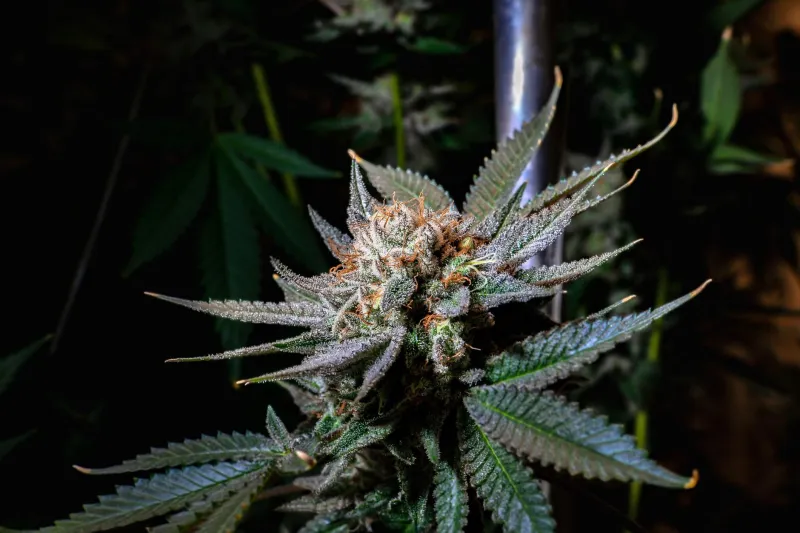
Here's the core insight: hemp is a complex plant that produces hundreds of biologically active compounds. These compounds don't just exist independently — they interact. Some enhance each other's effects, some modulate them, and some appear to counteract potential downsides. When you isolate CBD and remove everything else, you lose that entire network of interactions.
A well-cited 2015 study published in the journal Pharmacology & Pharmacy compared isolated CBD to a full-plant extract in treating inflammation and pain in mice. The full-plant extract outperformed isolate — and importantly, it continued to show dose-dependent improvement at higher doses, while isolate's effectiveness plateaued and then declined. That bell-curve response in isolate is one of the more striking findings in this area of research.
Terpenes: The Underrated Players
If you've ever noticed that different CBD products seem to feel subtly different even at the same dose, terpenes are a big part of why.
Terpenes are aromatic compounds found throughout the plant kingdom — they're what gives lavender its calming scent and citrus its energizing quality. Hemp contains dozens of them, and they're not just fragrance molecules. Many have documented biological effects.
Myrcene, one of the most common terpenes in hemp, has sedative and muscle-relaxant properties and may enhance the absorption of other cannabinoids across cell membranes. Linalool (also found in lavender) has documented anti-anxiety effects. Beta-caryophyllene is unique in that it directly binds to CB2 receptors in the endocannabinoid system, functioning essentially as a cannabinoid itself.
When you buy isolate, all of these are gone. When you buy a quality full-spectrum or broad-spectrum product, you're getting the whole terpene profile intact — and those terpenes are actively contributing to the outcome you're after.
Minor Cannabinoids: The Supporting Cast
CBD gets most of the attention, but hemp produces a range of other cannabinoids in smaller quantities that appear to play meaningful supporting roles.
CBG (cannabigerol) has been studied for its potential anti-inflammatory and neuroprotective properties. CBN (cannabinol) is associated with sedation and may enhance sleep quality. CBC (cannabichromene) appears to work synergistically with CBD on pain and mood pathways. And while federally compliant hemp products contain less than 0.3% THC, even that trace amount appears to contribute to the entourage effect without producing any psychoactive impact.
In a full-spectrum product, all of these minor cannabinoids are present. In isolate, they're absent. You're essentially getting the lead singer without any of the band.
Full-Spectrum vs. Broad-Spectrum: What's the Difference?
For anyone who needs to avoid THC entirely — whether for professional reasons, personal preference, or sensitivity — broad-spectrum is worth understanding as a middle path.
Broad-spectrum products retain the full range of cannabinoids, terpenes, and plant compounds but go through an additional step to remove THC specifically. The entourage effect is somewhat reduced compared to full-spectrum (since THC does appear to contribute to it), but broad-spectrum still dramatically outperforms isolate for most wellness applications.
If THC isn't a concern for you, full-spectrum is generally considered the most complete option. If it is a concern, broad-spectrum is a smart compromise that doesn't sacrifice as much as isolate does.
So Why Does Isolate Exist — And Why Is It So Popular?
Isolate is cheaper to produce and easier to standardize. It's also easier to formulate into products like gummies and capsules because it's odorless and flavorless. From a manufacturing standpoint, it's convenient.
From a marketing standpoint, "pure" is a word that sells. It sounds scientific, premium, and reassuring. And for consumers who are already a bit nervous about anything cannabis-adjacent, "pure CBD with nothing else" sounds safer.
The irony is that the "nothing else" is often exactly what you need for the product to work as well as it could.
What to Look For Instead
When you're shopping for a CBD product with real wellness goals in mind, look for full-spectrum or broad-spectrum on the label. Check the third-party lab report (called a Certificate of Analysis, or COA) — it should show not just CBD content but the full cannabinoid and terpene profile. If a brand can't or won't provide that, keep looking.
The "purity" of a CBD product isn't measured by how much has been stripped away. It's measured by how faithfully the product captures and preserves the complexity of the original plant. That complexity is where the real value lives.