Living With Chronic Pain? Here's an Honest Look at What CBD Can — and Can't — Do for You
About 51 million adults in the United States live with chronic pain. That's not a typo — roughly one in five Americans is navigating some form of persistent discomfort that affects their daily life, their sleep, their relationships, and their ability to just... exist comfortably. And a growing number of them have started reaching for CBD.
But here's the thing: the conversation around CBD and pain is messy. You've got wellness influencers swearing it cured their arthritis overnight, and you've got skeptics insisting it's all placebo. The actual truth, as usual, lives somewhere more complicated in the middle — and it's worth understanding before you spend a dime.
What the Research Actually Shows (No Spin)
Let's be direct: the FDA has not approved CBD for pain management. The only CBD-based medication with FDA approval is Epidiolex, and that's specifically for certain seizure disorders. So any brand claiming their CBD product "treats" chronic pain is overstepping, and you should be cautious of that language.
That said, the research landscape is genuinely encouraging — and it's growing fast.
A 2020 survey published in Cannabis and Cannabinoid Research found that 62% of CBD users reported using it for a medical condition, with pain being the most common reason. Anecdotal? Sure. But that kind of consistent self-reporting across hundreds of thousands of people isn't nothing.
On the clinical side, a 2018 review in Frontiers in Pharmacology examined 132 original studies on CBD and found strong evidence supporting its anti-inflammatory and analgesic (pain-reducing) properties in animal models, with emerging evidence in human trials. A 2019 study published in the European Journal of Pain showed that topical CBD applied to rats with arthritis significantly reduced joint swelling and pain-related behaviors without side effects.
Human trials are still catching up — largely because of decades of federal restrictions on cannabis research — but the mechanistic case for CBD's role in pain modulation is solid. CBD interacts with CB1 and CB2 receptors in your endocannabinoid system, which plays a direct role in how your body processes pain signals. It also appears to influence TRPV1 receptors, which are involved in pain and inflammation, and may reduce the production of certain pro-inflammatory cytokines.
In plain terms: your body has a built-in system designed to regulate pain, and CBD interacts with that system. That's not hype — that's biology.
Why It Works for Some People and Not Others
This is the part most CBD articles skip, and it's arguably the most important.
CBD doesn't work the same way for everyone, and that's not a flaw — it's a reflection of how complex human physiology is. A few factors that influence individual response:
Endocannabinoid tone. Some people naturally have more active endocannabinoid systems than others. If yours is already functioning well, you may notice subtler effects from CBD.
The type of pain. CBD appears to be more effective for inflammatory pain (like arthritis or tendinitis) than for neuropathic pain (like diabetic nerve pain or post-surgical nerve damage). The mechanisms are different, and so is the response.
The product and delivery method. A low-quality isolate tincture is a completely different product than a high-quality full-spectrum oil or a targeted topical cream. Expecting consistent results without consistent product quality is like expecting the same coffee experience from a gas station cup and a freshly pulled espresso.
Consistency and patience. This is where a lot of people give up too soon. CBD isn't ibuprofen — it doesn't slam your system with a fast-acting hit. It tends to work gradually, building over days and weeks as your endocannabinoid system recalibrates.
Real People, Real Results
Take someone like Marcus, 58, a retired contractor from Ohio who spent decades on job sites and now deals with persistent lower back pain and knee inflammation. He started using a full-spectrum CBD tincture daily about eight months ago, mostly out of desperation after finding that over-the-counter NSAIDs were wrecking his stomach lining.
"I didn't notice much the first two weeks," he says. "But somewhere around week three, I realized I was sleeping better and the morning stiffness wasn't as bad. It's not gone — I'm not gonna lie to you. But it's manageable now in a way it wasn't before."
Or consider Dana, 44, a nurse in Atlanta managing fibromyalgia who uses CBD topicals on her most affected areas and a nightly tincture for sleep. "I'm not off all my other medications," she's quick to clarify. "But CBD has become part of my toolkit, and it genuinely helps me get through a shift."
Neither of these are miracle stories. They're realistic ones — and that's actually more useful.
A Strategic Approach to Using CBD for Pain
If you're going to try CBD for chronic pain, here's how to do it intelligently:
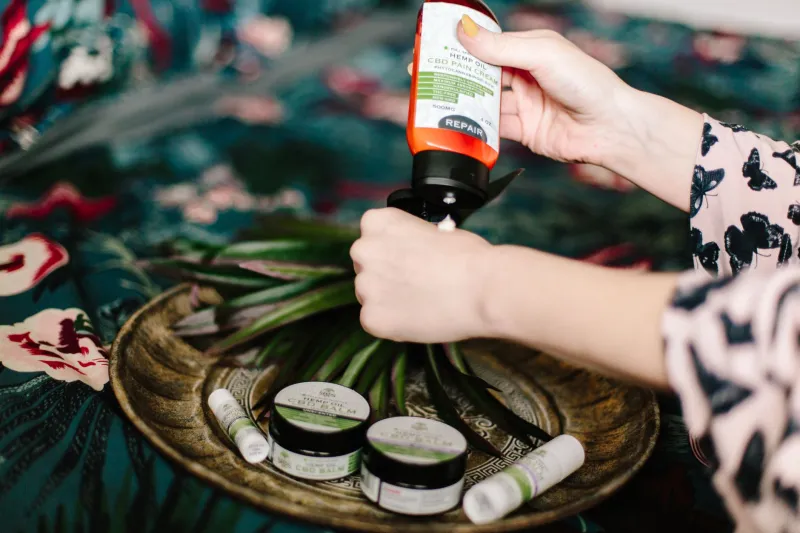
Match the method to the problem. For localized pain — a specific joint, a sore muscle group — start with a topical CBD cream or balm applied directly to the area. For systemic or widespread pain, a tincture taken sublingually (under the tongue) typically offers better bioavailability than a capsule.
Start low, go slow. Begin with 15–25mg per day and hold that dose for at least two weeks before adjusting. Jumping to high doses immediately makes it harder to assess what's actually working.
Time it intentionally. If mornings are your worst time for stiffness, try taking CBD the night before — some users find the effects carry into the next day. If post-activity soreness is your issue, dosing within an hour after exercise may be more effective.
Stack it with other strategies. CBD works best as part of a broader wellness approach. Anti-inflammatory nutrition (think omega-3s, turmeric, leafy greens), quality sleep, and gentle movement all support the same systems CBD is targeting. They're additive, not redundant.
Track your results. Keep a simple pain journal — rate your discomfort on a scale each morning and evening, note your CBD dose and timing, and track sleep quality. Two to four weeks of data will tell you far more than a gut feeling.
Look for third-party tested products. Especially for therapeutic use, you want to know exactly what's in your CBD. A Certificate of Analysis from an independent lab should be non-negotiable.
The Bottom Line
CBD isn't a cure for chronic pain, and anyone telling you otherwise is overselling it. But the evidence that it can be a meaningful part of a pain management strategy — particularly for inflammatory conditions — is real and growing. The key is approaching it with realistic expectations, quality products, and enough patience to actually give it a fair shot.
For millions of Americans who feel like they've exhausted their options, that's not a small thing. It might just be the piece that finally makes the rest of the puzzle click.