Train More, Hurt Less: How CBD Is Quietly Revolutionizing Athletic Recovery

Anyone who's pushed through a tough workout knows what the next morning feels like. That stiff, heavy, please-don't-ask-me-to-walk-down-stairs sensation is just part of the deal, right? Maybe not. A growing number of athletes — from CrossFit regulars in Austin to marathon runners in Chicago — are rethinking their post-workout routines, and CBD is showing up as a serious player in that conversation.
This isn't about replacing hard work or cutting corners on training. It's about recovering smarter so you can actually show up for the next session without feeling like you got hit by a truck.
What Happens to Your Body After a Hard Training Session
When you exercise intensely, your muscles experience microscopic tears. That's normal — it's literally how you get stronger. But that process also triggers an inflammatory response, and while some inflammation is necessary for adaptation, too much of it for too long is what causes that deep, dragging soreness that can sideline even the most dedicated athletes.
Traditional recovery methods — think foam rolling, contrast showers, compression gear, and NSAIDs like ibuprofen — all aim to manage this process. They work to varying degrees. But they also come with their own trade-offs. Long-term NSAID use, for example, has been linked to gastrointestinal issues and may actually blunt some of the muscle adaptation you're working so hard to achieve.
That's where CBD starts to look interesting.
What the Science Says (Without the Hype)
Cannabidiol, the non-psychoactive compound derived from hemp, interacts with the body's endocannabinoid system — a regulatory network involved in pain signaling, immune response, and inflammation. Research is still evolving, but early findings are promising.
A 2020 review published in Sports Medicine noted that CBD's anti-inflammatory and analgesic properties make it a plausible candidate for exercise recovery support. The compound appears to influence cytokine production — the chemical messengers that drive inflammation — which could help dial down that post-workout soreness without fully suppressing the adaptive response your body needs.
CBD also shows potential for improving sleep quality, which is arguably the most underrated recovery tool out there. Deep sleep is when your body does its most significant repair work. If you're waking up stiff and groggy, your recovery is already compromised before you even lace up your shoes.
Real Athletes, Real Routines
Jamie, a 34-year-old recreational triathlete from Denver, started incorporating CBD oil into her post-race routine about two years ago. "I used to take ibuprofen after every long ride, almost out of habit," she says. "I switched to a CBD tincture about an hour before bed on hard training days, and honestly, I wake up feeling more human. My legs don't feel as trashed."
Marcus, a 28-year-old powerlifter in Atlanta, takes a different approach. He uses a CBD topical balm directly on his knees and lower back after heavy squat sessions. "It's not like it makes the soreness disappear completely," he admits, "but it takes the edge off. I'm not dreading the next day as much."
These aren't outliers. Across fitness communities online and in gyms nationwide, similar stories are becoming increasingly common. The interest is real, and it's coming from people who care deeply about performance — not people looking for shortcuts.
How CBD Stacks Up Against Traditional Recovery Methods
Let's be honest: CBD isn't going to replace sleep, hydration, or proper nutrition. Nothing does. But when it comes to managing inflammation and discomfort as part of a broader recovery stack, it holds its own.
Compared to NSAIDs, CBD doesn't carry the same gastrointestinal risk profile and won't interfere with muscle protein synthesis. Compared to prescription pain relievers, it's non-habit-forming and doesn't impair cognitive function or motor skills. And compared to doing nothing, well — the early data and the anecdotal evidence both suggest it's worth trying.
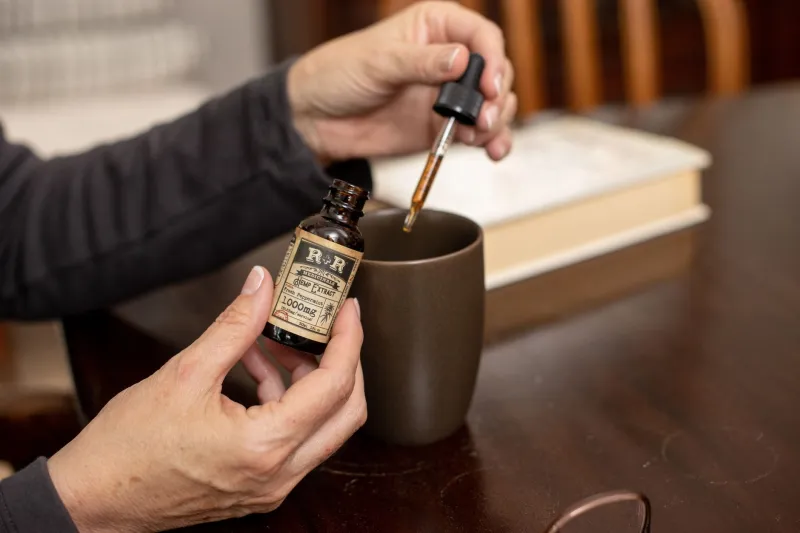
One area where CBD clearly shines is versatility. You can take it orally as a tincture or capsule for systemic support, apply it topically for localized relief, or even use a CBD-infused recovery beverage as part of your post-workout cooldown. That flexibility makes it easy to plug into whatever routine you've already built.
How to Actually Use CBD for Recovery
If you're new to this, here's a practical starting point:
Timing matters. For general soreness and sleep support, try taking a CBD tincture or softgel 30–60 minutes before bed on training days. For localized muscle or joint discomfort, apply a topical product directly to the area right after your workout.
Start low, go slow. CBD affects everyone a little differently. A dose of 15–25mg is a reasonable starting point for most adults. Give it a couple of weeks before adjusting.
Quality is everything. Look for products that are third-party lab tested, made from US-grown hemp, and free from unnecessary additives. A certificate of analysis (COA) should be easy to find on any reputable brand's website.
Don't ditch the basics. CBD works best as a complement to good sleep hygiene, smart programming, and adequate nutrition — not a substitute for any of them.
The Bigger Picture
Athletic culture in America has always been obsessed with optimization. We track macros, analyze sleep data, and debate the merits of cold plunges. Adding CBD to that equation isn't a leap — it's a logical extension of the same curiosity that drives people to find every possible edge.
The key is approaching it with realistic expectations. CBD probably won't turn a mediocre training block into a great one. But it might just help you recover well enough to string together more great training days in a row. And in the long game of fitness, that compounds into something significant.
Your body works hard for you. Giving it every reasonable advantage to bounce back is just good sense.