Don't Be Fooled by the Label: How Third-Party Lab Testing Reveals What CBD Brands Won't Tell You
The Name on the Bottle Doesn't Mean What You Think It Does
Walk into any wellness shop or scroll through Instagram for five minutes, and you'll find no shortage of CBD brands competing for your attention. Polished logos. Influencer partnerships. Promises of calm, clarity, and better sleep. It's a lot.
But here's the uncomfortable truth: brand recognition in the CBD space doesn't correlate with product quality the way it might in, say, the vitamin aisle at your local pharmacy. The CBD industry in the US is still loosely regulated, which means companies — big and small, famous and obscure — can make claims that aren't always backed up by what's actually in the bottle.
So how do you cut through the noise? Two words: third-party testing.
If you're spending real money on CBD products, understanding how to evaluate lab results isn't optional — it's essential. And once you know what to look for, you'll never shop the same way again.
What Third-Party Testing Actually Means
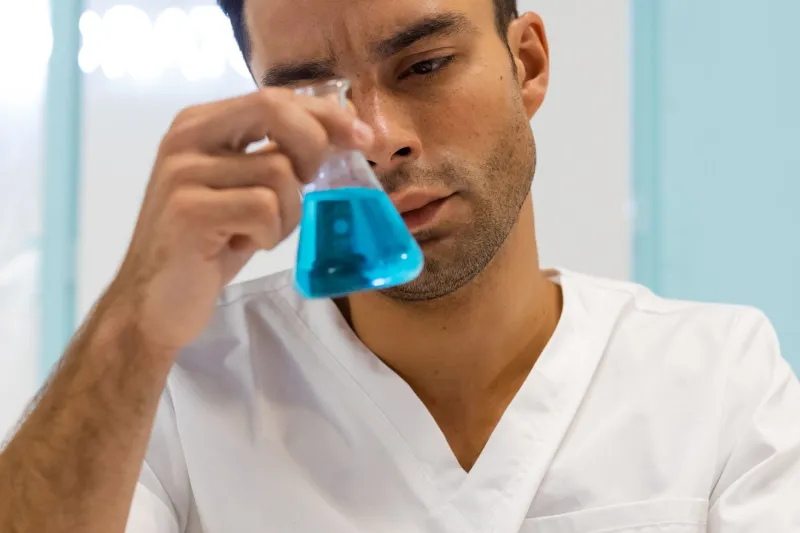
A third-party lab test is exactly what it sounds like: an independent laboratory — one that has no financial relationship with the CBD brand — analyzes a product sample and reports what it actually contains. This is different from in-house testing, where a company tests its own products. (You wouldn't ask someone to grade their own exam, right?)
Reputable third-party labs are accredited, typically through organizations like ISO/IEC 17025, and they publish their findings in a document called a Certificate of Analysis, or COA. This is your roadmap to understanding whether a CBD product is worth your money.
Here's the key thing: any brand that's serious about transparency will make their COAs publicly available — usually on their website, or via a QR code on the packaging. If you can't find one? That's your first red flag.
Breaking Down a COA: What You're Actually Looking At
A COA can look intimidating at first glance — lots of numbers, chemical names, and abbreviations. But once you understand the structure, it starts to make sense pretty quickly.
Cannabinoid Profile This is the most important section. It tells you exactly how much CBD (and other cannabinoids like CBG, CBN, or THC) is actually present in the product. Compare these numbers to what the brand claims on the label. If a tincture says it contains 1,000mg of CBD but the COA shows 600mg — that's a significant discrepancy, and a major trust issue.
For full-spectrum products, you'll also want to confirm that THC levels fall at or below 0.3% — the federal legal limit in the US under the 2018 Farm Bill. Some states have their own rules, so it's worth knowing your local regulations too.
Heavy Metals Testing Hemp is what's called a bioaccumulator — it absorbs whatever's in the soil it grows in, including heavy metals like lead, arsenic, cadmium, and mercury. A thorough COA will include a heavy metals panel showing that these contaminants are either absent or within safe limits. Skipping this test is a cost-cutting move some brands make. Don't let them get away with it.
Pesticide Residue Similar story here. Hemp grown with synthetic pesticides can carry those residues into the final product. Look for a pesticide panel that shows non-detectable (ND) levels across the board, or levels well within safe thresholds.
Microbial Testing This checks for bacteria, mold, yeast, and other microbial contaminants. It's especially important for products like gummies or capsules that could be more susceptible to contamination during manufacturing.
Residual Solvents Some extraction methods use chemical solvents to pull CBD from the hemp plant. A quality COA will confirm that no harmful solvents are lingering in the final product.
Red Flags That Should Stop You in Your Tracks
Now that you know what a solid COA looks like, here are the warning signs that should make you pump the brakes:
- No COA available. Full stop. If a brand doesn't publish lab results, walk away.
- COA is outdated. Lab results should be tied to specific batch numbers and ideally within the last 12 months. A COA from three years ago tells you nothing about what's in today's bottle.
- The COA is from the brand's own lab. In-house testing is not third-party testing. Check the lab name — it should be a separate, accredited facility.
- Missing panels. A COA that only shows cannabinoid content but skips heavy metals, pesticides, or microbials is incomplete. It may mean the brand is hiding something, or simply cutting corners.
- Numbers don't match the label. A 10–15% variance between labeled and actual CBD content can be acceptable, but anything beyond that is a quality control problem.
- No batch number. Lab results should be traceable to a specific production batch. Generic or undated COAs are essentially meaningless.
Why This Matters More Than a Fancy Website
It's easy to get dazzled by a brand that's nailed its aesthetic — clean typography, warm earth tones, a founder's story about finding wellness after burnout. That stuff is appealing. But none of it tells you whether the product inside the bottle is safe, potent, or honestly labeled.
The CBD market in the US has grown explosively over the past several years, and with that growth has come a flood of products ranging from genuinely excellent to flat-out fraudulent. The FDA has issued warning letters to companies making unsupported health claims and selling mislabeled products. Consumer advocacy groups have run independent tests showing that a significant portion of CBD products on the market don't contain what they claim.
Third-party testing is the mechanism that separates accountable brands from the rest. It's not a marketing tactic — it's a baseline standard of integrity.
How to Use This Knowledge When You Shop
Here's a simple checklist to run through before buying any CBD product:
- Find the COA. Check the brand's website or scan the QR code on packaging.
- Confirm the lab is independent. Look up the testing lab if you're unsure.
- Match the batch number. Make sure the COA corresponds to the actual product batch you're buying.
- Check the cannabinoid numbers. Do they match the label claims?
- Scan for the full panel. Heavy metals, pesticides, microbials, solvents — all should be present.
- Verify THC levels. Especially important for full-spectrum products.
This process takes maybe five minutes. And it's five minutes that could save you from wasting money — or worse, putting something questionable into your body.
The Bottom Line
Brand recognition might tell you who has the best marketing budget. Third-party lab testing tells you who actually stands behind their product.
At Truman CBD, we believe that informed consumers make better choices — and that transparency isn't something you should have to hunt for. Whether you're new to CBD or you've been using it for years, treating every purchase like a small act of due diligence is just smart wellness. The brands worth your loyalty will make that easy. The ones that don't? They've already told you everything you need to know.