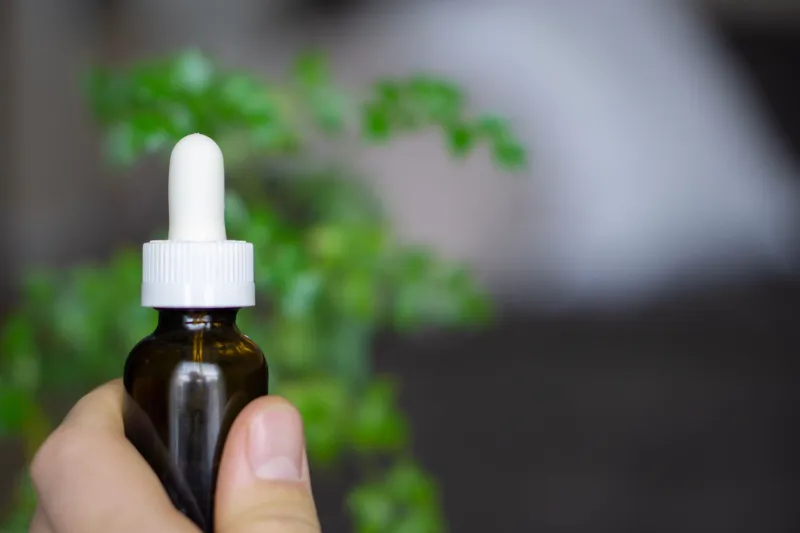
Your CBD Isn't Failing You — Your Approach Might Be

It's a frustrating moment a lot of CBD users know well. You started out feeling genuinely good — calmer, sleeping better, less tension in your shoulders by Thursday afternoon. Then slowly, almost without noticing, things got quieter. The edge came back. Sleep got spotty again. You started wondering if maybe you just need more.
Here's the thing: that instinct to increase your dose is understandable, but it's often the wrong move. What most people are experiencing isn't a true pharmacological tolerance — it's something more nuanced, and a lot more fixable.
What "Tolerance" Actually Means (And Why CBD Is Different)
When we talk about tolerance in a clinical sense, we mean the body has adapted to a substance in a way that requires progressively higher amounts to achieve the same effect. This is well-documented with certain medications and substances that directly flood the brain's receptors over time.
CBD doesn't work quite like that. Rather than binding directly to receptors the way some other compounds do, cannabidiol interacts with the endocannabinoid system in a more indirect way — nudging it, supporting it, helping it regulate itself. Some research even suggests that regular CBD use may have a reverse tolerance effect, where the body becomes more efficient at using it over time, not less. That means some people actually need less CBD after consistent use, not more.
So if your CBD seems to have stopped working, the issue is rarely that your body has shut the door on it. More often, something else has shifted.
The Product Consistency Problem Nobody Talks About Enough
One of the most common — and most overlooked — reasons CBD seems to stop working is product inconsistency. The CBD market in the United States, while growing more regulated, still has wide variation in quality. A bottle that worked great three months ago might have a different cannabinoid profile, carrier oil, or concentration than the one you just reordered, even if the label looks identical.
Third-party lab testing (also called Certificates of Analysis, or COAs) is the only real way to verify what's in your product. If the company you're buying from doesn't publish current, batch-specific COAs, you genuinely don't know what you're getting. Potency can vary, and trace compounds that contribute to the entourage effect — terpenes, minor cannabinoids — may have degraded or been removed entirely.
Before assuming your body has adapted, check your product. If you've switched brands recently or your current brand doesn't test consistently, that's your first place to look.
Life Changes More Than We Give It Credit For
Here's something that gets glossed over in wellness conversations: your body isn't static. Stress levels, sleep quality, diet, exercise habits, body weight, and even the season can all influence how you experience CBD. What worked perfectly during a calm stretch of summer might feel less effective in the middle of a high-pressure work quarter — not because the CBD changed, but because you did.
If you've gone through any meaningful lifestyle shifts since CBD stopped feeling as effective, that context matters. Higher chronic stress, for example, puts more demand on the endocannabinoid system. Poor sleep compounds inflammation. A change in diet can affect how quickly CBD metabolizes. These aren't reasons to give up — they're reasons to recalibrate.
Think of it less like a supplement you take and more like a practice you maintain. The conditions around it matter.
Timing and Delivery Method: The Variables Most People Ignore
Not all CBD hits the same way, even at the same dose. How you take it — and when — has a real impact on how much actually makes it into your system.
Oral tinctures taken sublingually (held under the tongue for 60–90 seconds before swallowing) have a faster and more direct absorption path than capsules or gummies, which have to survive digestion first. If you've switched from a tincture to an edible without adjusting for that difference in bioavailability, you might be getting less than you think.
Timing matters too. CBD taken on an empty stomach processes differently than CBD taken with a meal — especially one that includes healthy fats, which can significantly improve absorption. If your routine has drifted (dosing at random times, skipping days, taking it on an empty stomach when you used to take it with food), that inconsistency alone could explain the plateau.
Smarter Strategies Before You Reach for a Higher Dose
If you're convinced something has changed, here are practical steps to try before bumping up your milligrams:
Audit your product. Pull up the COA for your current batch. Compare the actual CBD concentration and terpene profile to what you were using when things were working well. If your brand doesn't provide this, that's a red flag worth acting on.
Try a short reset. Some wellness practitioners suggest a brief "CBD holiday" — three to seven days without any CBD — to allow the body to recalibrate. This isn't universally necessary, but for some users, a short break actually restores sensitivity.
Tighten your routine. Take it at the same time daily, with a consistent amount of food. Consistency is genuinely underrated here. Your endocannabinoid system responds better to steady, predictable support than to sporadic, variable dosing.
Reassess your expectations. This one's harder but important. CBD isn't a pharmaceutical with a guaranteed, measurable outcome. Some of its benefits are subtle — reduced reactivity, slightly better sleep architecture, less physical tension. If you're looking for a dramatic shift every time, you might be missing the quieter wins that are actually there.
Look at the full picture. Are you hydrated? Moving your body? Managing stress through other channels too? CBD works best as part of a broader wellness approach, not as a standalone fix for everything.
The Bottom Line
Tolerance — real, clinical tolerance — to CBD is far less common than the wellness internet would have you believe. Most people who feel like their CBD has stopped working are dealing with something more correctable: product variability, lifestyle drift, inconsistent habits, or expectations that don't match how CBD actually functions.
The answer almost never starts with taking more. It starts with taking smarter — paying closer attention to what you're buying, how you're using it, and what else is going on in your body and life at the same time.
That recalibration is usually enough. And it's a lot more sustainable than chasing a higher dose indefinitely.